
Recap of the Swiss Malta Alternative Investment Forum on 22 October 2026
The Swiss-Malta Alternative Investment Forum on 22 October 2026 brought Swiss and Maltese perspectives on alternative investments into one discussion. Specialists in legal advice, regulation and fund operations explored structuring options, collaboration with Swiss asset managers and the implementation of fund and family-office arrangements. The presentations and closing questions showed how closely structure, governance, administration and safekeeping are connected, including for tokenised assets.
Moderated by Dr Alexander Schiemenz of LINDEMANNLAW and Joseph Camilleri of FinanceMalta, the English-language workshop explored how Swiss asset managers and family offices can assess Malta as a base for alternative investments. The discussion ranged from PIF, NPIF and NAIF structures to family wealth arrangements and tokenised assets.
Proposed wording for review: speaker statements are awaiting approval; the family-office statement is an illustrative example, not feedback from an identified participant.
The dialogue between Switzerland and Malta benefits when legal, regulatory and operational questions are considered together. The Forum brought these perspectives to the same table.
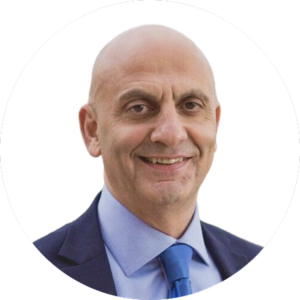 Joseph Camilleri
Governor, Funds & Asset Servicing Industry, FinanceMalta
Cross-border investment structures work best when legal advice, regulation and day-to-day implementation are considered together. The Forum connected these perspectives for Swiss asset managers and family offices.
 Dr. iur. Alexander Schiemenz
Managing Partner, LINDEMANNLAW
Start with the investors and the distribution strategy
Dr Tatiana Zakharova, Partner at LINDEMANNLAW, compared Professional Investor Funds (PIFs), Notified Professional Investor Funds (NPIFs) and Notified Alternative Investment Funds (NAIFs). The choice involves more than a vehicle name: who may invest, how the manager is appointed, where the fund will be marketed and which service providers are needed all matter.
Giulia Gaddari of the Malta Financial Services Authority (MFSA) illustrated how a Swiss investment manager can participate in different arrangements. Where EEA distribution is a priority, an AIF structure with an authorised EU AIFM and appropriate delegation arrangements may be relevant. An NPIF does not itself provide an AIFMD marketing passport; marketing outside Malta remains subject to the rules of the destination jurisdiction. [1, 2]
A fund structure must fit the project. Comparing PIFs, NPIFs and NAIFs helps bring legal requirements and practical implementation into the discussion from the outset.
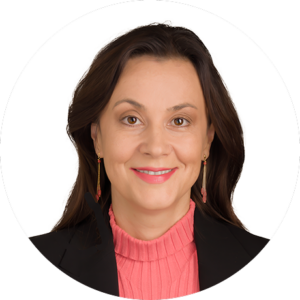 Dr. Tatiana Zakharova, LL.M.
Partner, LINDEMANNLAW
A wider choice of legal forms
Gaddari also presented the Special Limited Partnership Fund, a legal vehicle introduced in 2025 without separate legal personality. It adds a partnership-based option for non-retail fund structures, including strategies such as private equity and venture capital. Choosing the legal form and choosing the regulatory route are related decisions, but they are not the same decision. [3]
Family wealth requires its own design
The family-office discussion considered funds, trusts and private foundations as different tools for organising investments and governance. Zakharova described how a fund can help pool investments and provide clear valuation and participation rules, while a foundation may address different ownership and beneficiary needs.
Gaddari discussed the specific NPIF arrangements available for qualifying single-family-office structures. Their eligibility conditions matter: a family investing its own wealth is not automatically equivalent to a promoter raising money from external investors. The starting point is the family’s needs, then the appropriate structure and responsibilities.
From structure to operation
Key lessons from the administrator and depositary perspectives
A quick notification process still needs preparation
Christ Briffa of BOV Fund Services focused on what makes a fund work after the structure has been selected. Banking and safekeeping arrangements, accounting, valuation and investor servicing need to be prepared alongside the legal documentation. A short notification process is not a promise that every part of a launch will be ready within the same period.
His practical message was that a notified route changes how responsibilities are allocated; it does not remove governance and control requirements. The fund’s assets, strategy and investors should determine the operating model, rather than speed alone.
A fund structure proves itself in day-to-day operation. Governance, valuation, accounting and regulatory reporting should therefore be planned from the outset, alongside the choice of vehicle.
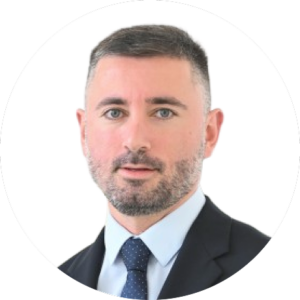 Christ Briffa
Head of the Finance Division, BOV Fund Services
Safekeeping goes beyond holding securities
Francesco Scotto, CEO of Zarattini International, explained why the asset mix matters when designing safekeeping. Alongside custody of eligible financial instruments, depositary work can involve ownership verification, record-keeping, cash-flow monitoring and oversight.
Tokenisation adds another layer. A financial instrument does not cease to be a financial instrument simply because it is represented digitally. Crypto-assets that qualify as financial instruments are excluded from MiCA’s scope. The applicable classification, permissions and safekeeping model therefore need to be assessed before selecting a provider or technology. [4]
The discussion also highlighted wallet, cyber and smart-contract risks. Gaddari described the MFSA’s engagement with tokenised fund units and emerging business models. Consultation proposals must be distinguished from binding rules or approval of a particular structure. [5]
Custody and independent asset oversight belong early in the structuring process. For tokenised assets in particular, the responsibilities of each service provider need to be clear.
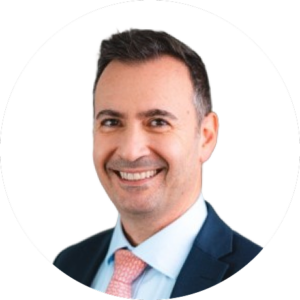 Francesco Scotto
Chief Executive Officer, Zarattini International Ltd
The jurisdiction is part of a larger operating decision
Dr Bernice Buttigieg of FinanceMalta placed the technical discussion in the wider context of Malta’s financial-services ecosystem. Her presentation emphasised international connectivity, expertise and the development of the financial centre alongside taxation.
Malta’s proposition extends beyond individual fund vehicles. International connections, expertise and a financial centre that brings innovation and investor protection together are equally important.
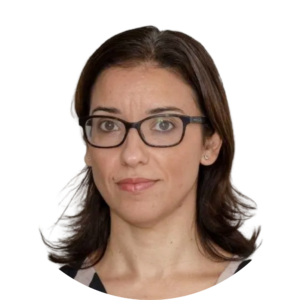 Dr. Bernice Buttigieg
Chief Strategy Officer, FinanceMalta
Three questions to take into the next discussion
- Where will the fund be marketed? Define the target investors and jurisdictions before selecting the route.
- Who will do what? Establish responsibility for investment management, due diligence, administration and safekeeping.
- What must be ready before launch? Align documentation, service-provider onboarding, governance and operational controls.
Request the workshop presentation or send your questions to the event team to continue the discussion.
Workshop materials
The workshop presentation is freely available as a PDF.
Discuss your Malta strategy with LINDEMANNLAW.
The discussion clarified how governance, administration and custody fit together when assessing a fund structure for a family office.
CEO of a Family Office
Frequently asked questions
Does notification remove governance requirements?
No. The allocation of checks may differ, but governance, due diligence and operational responsibilities remain.
Does tokenisation automatically make an asset subject to MiCA?
No. Its legal classification matters; financial instruments are excluded from MiCA’s scope. [4]
This recap summarises the workshop discussion on 22 October 2026. It provides general information, not legal, tax or investment advice. The suitability of any structure depends on its facts and the applicable rules.